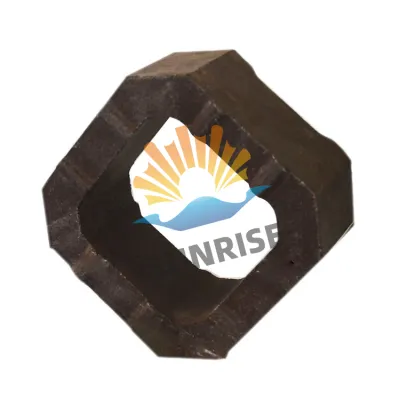
High-temperature industries, including steel, glass, and cement, face numerous challenges in their daily operations. Erosion, spalling, and temperature fluctuations are common issues that can lead to frequent damage to furnace linings, production interruptions, and increased maintenance costs. Finding a reliable and cost-effective solution to these problems is crucial for the stable and efficient operation of high-temperature processes.
Ordinary magnesia-chrome bricks have emerged as a stable solution to these challenges. With high strength, excellent corrosion resistance, good slag resistance, and thermal shock stability, these bricks are well-suited for use in high-temperature industrial applications.
Ordinary magnesia-chrome bricks possess high compressive strength, making them suitable for use in areas subject to high mechanical stress. In steelmaking furnaces, for example, these bricks can withstand the pressure exerted by molten metal and slag, ensuring the structural integrity of the furnace lining.
One of the key advantages of ordinary magnesia-chrome bricks is their excellent corrosion resistance. They can resist the attack of various corrosive substances, such as molten metals, slags, and gases, at high temperatures. This property makes them ideal for use in environments where corrosion is a major concern, such as in the lining of steel converters and glass melting furnaces.
Good slag resistance is another important feature of ordinary magnesia-chrome bricks. Slag is a by-product of high-temperature processes and can cause significant damage to furnace linings. These bricks can effectively resist the penetration and erosion of slag, reducing the frequency of lining repairs and replacements.
High-temperature industrial processes often involve rapid temperature changes, which can cause thermal shock to furnace linings. Ordinary magnesia-chrome bricks have excellent thermal shock stability, allowing them to withstand repeated heating and cooling cycles without cracking or spalling. This property is particularly important in applications where temperature fluctuations are common, such as in the preheating zones of cement kilns.
In the steel industry, ordinary magnesia-chrome bricks are widely used in electric arc furnaces, basic oxygen furnaces, and ladles. Their high strength, corrosion resistance, and slag resistance make them an ideal choice for lining these high-temperature vessels. By using ordinary magnesia-chrome bricks, steel manufacturers can significantly extend the service life of their furnaces and ladles, reduce maintenance costs, and improve production efficiency. For example, some steel plants have reported a 30% increase in furnace lining lifespan after switching to ordinary magnesia-chrome bricks.
The glass industry also benefits from the use of ordinary magnesia-chrome bricks. These bricks are used in the melting tanks and forehearths of glass furnaces, where they are exposed to high temperatures and corrosive glass melts. The excellent corrosion resistance and thermal shock stability of ordinary magnesia-chrome bricks help to prevent the erosion of the furnace lining and ensure the quality of the glass products. Glass manufacturers have found that using these bricks can reduce the frequency of furnace relining and improve the overall productivity of their glassmaking processes.
In the cement industry, ordinary magnesia-chrome bricks are used in the preheating zones and calcining zones of cement kilns. The high strength and thermal shock stability of these bricks enable them to withstand the harsh conditions in these areas, such as high temperatures, mechanical stress, and rapid temperature changes. By using ordinary magnesia-chrome bricks, cement manufacturers can reduce the wear and tear on their kiln linings, lower maintenance costs, and increase the production capacity of their kilns.
Compared with traditional magnesia bricks, ordinary magnesia-chrome bricks offer several significant advantages. In a laboratory test, the corrosion rate of ordinary magnesia-chrome bricks was found to be 50% lower than that of traditional magnesia bricks when exposed to the same corrosive slag at high temperatures. Additionally, the thermal shock resistance of ordinary magnesia-chrome bricks was significantly better, with fewer cracks and spalling after repeated heating and cooling cycles. These results clearly demonstrate the superiority of ordinary magnesia-chrome bricks over traditional materials.
Many companies have already experienced the benefits of using ordinary magnesia-chrome bricks. A steel manufacturer in Europe reported that after replacing their traditional magnesia brick linings with ordinary magnesia-chrome bricks, they were able to increase the service life of their electric arc furnace from 150 heats to 200 heats, resulting in a 33% reduction in maintenance costs. Another glass manufacturer in Asia found that using ordinary magnesia-chrome bricks in their melting tank reduced the frequency of relining from once every 2 years to once every 3 years, saving them a significant amount of time and money.
Ordinary magnesia-chrome bricks are a reliable and cost-effective solution for high-temperature industrial applications. With their high strength, excellent corrosion resistance, good slag resistance, and thermal shock stability, these bricks can help you overcome the challenges of high-temperature environments, extend the service life of your equipment, and reduce maintenance costs. Choose ordinary magnesia-chrome bricks, and you're choosing stable production. To learn more about our ordinary magnesia-chrome bricks or to obtain technical data, click here.