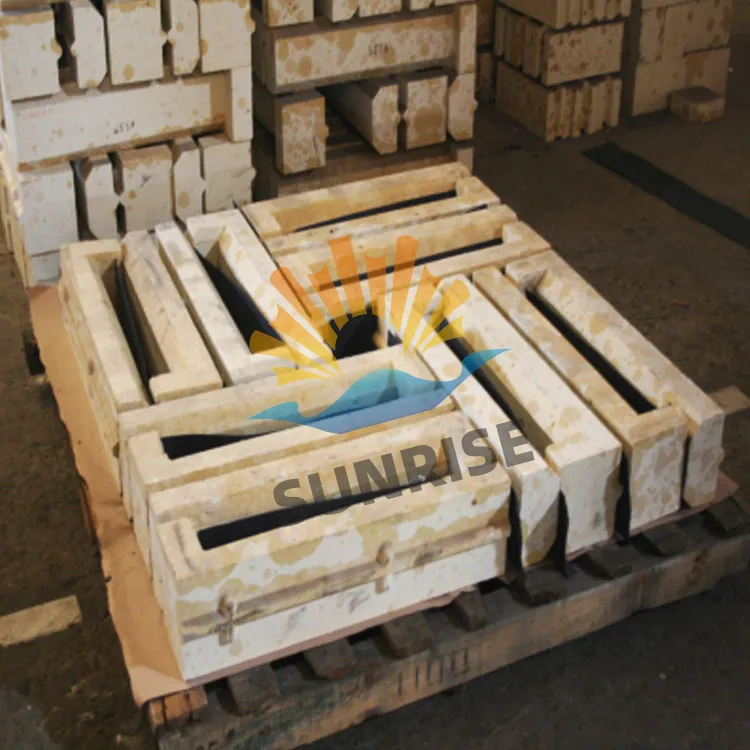
In today’s competitive ceramic manufacturing landscape, kiln performance directly impacts product quality, energy efficiency, and operational costs. Many companies still rely on traditional refractories that crack under thermal stress or degrade quickly in aggressive atmospheres—leading to unplanned downtime, higher maintenance, and inconsistent output.
A recent survey by the International Ceramics Association found that over 68% of ceramic plants report refractory failure within 12–18 months of installation—mainly due to thermal shock (37%), chemical erosion (29%), and mechanical wear (24%). These issues not only increase replacement frequency but also reduce kiln efficiency by up to 15%, according to lab testing at the University of Sheffield’s Materials Research Lab.
Over 120 ceramic manufacturers—from Italy’s largest porcelain tile producer to Japan’s premium pottery brand—have adopted SiSiC bricks as their standard refractory solution. One major U.S. stoneware company reported a 30% drop in kiln repair costs within six months of switching. Similarly, a Middle Eastern ceramics plant saw a 20% improvement in throughput after replacing old bricks with our SiSiC lining.
“We’ve been using these bricks for two years now—we’re saving money, reducing waste, and improving consistency across batches.”
— Operations Manager, Top 10 Ceramic Manufacturer in Europe
Whether you're evaluating options for a new kiln or upgrading an existing one, SiSiC bricks offer measurable benefits: longer life, better energy use, and fewer production interruptions. We’ve helped hundreds of ceramic producers make the switch—and we can help you too.
Get Your Free Sample + Customized Refractory Assessment
 416
|
416
|
 magnesium chrome brick vs magnesia brick
steelmaking refractory materials
thermal shock resistant bricks
refractory lining longevity
high temperature refractory solutions
magnesium chrome brick vs magnesia brick
steelmaking refractory materials
thermal shock resistant bricks
refractory lining longevity
high temperature refractory solutions
 435
|
high thermal conductivity silicon brick
silicon brick structure optimization
refractory material performance
industrial energy efficiency
heat transfer enhancement
435
|
high thermal conductivity silicon brick
silicon brick structure optimization
refractory material performance
industrial energy efficiency
heat transfer enhancement
 215
|
direct bonded magnesia chrome brick
magnesium chrome brick comparison
refractory material performance
high temperature strength improvement
industrial kiln application
215
|
direct bonded magnesia chrome brick
magnesium chrome brick comparison
refractory material performance
high temperature strength improvement
industrial kiln application
.jpg?x-oss-process=image/resize,h_600,m_lfit/format,webp) 68
|
directly bonded magnesia-chrome bricks
traditional magnesia-chrome bricks
refractory materials performance comparison
68
|
directly bonded magnesia-chrome bricks
traditional magnesia-chrome bricks
refractory materials performance comparison
 389
|
direct bonded magnesia-chrome bricks
industrial refractory innovation
high-temperature refractory materials
dead-burned magnesia-chrome bricks
furnace lining materials
389
|
direct bonded magnesia-chrome bricks
industrial refractory innovation
high-temperature refractory materials
dead-burned magnesia-chrome bricks
furnace lining materials


.jpg?x-oss-process=image/resize,m_fill,h_200,w_200/format,webp)
.jpg?x-oss-process=image/resize,m_fill,h_200,w_200/format,webp)

.jpg?x-oss-process=image/resize,m_fill,h_200,w_200/format,webp)