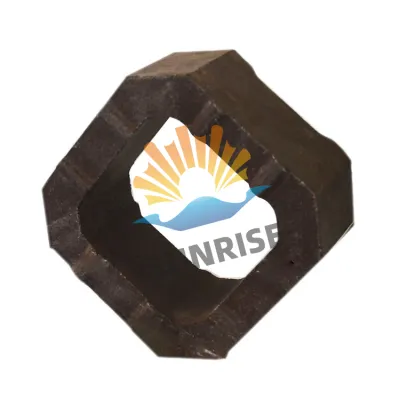
In high-temperature industries such as metallurgy and glass manufacturing, the selection of refractory materials is crucial for ensuring production stability and efficiency. This article will conduct an in-depth analysis of the advantages of ordinary magnesia-chrome bricks over traditional magnesia bricks in terms of corrosion resistance and thermal shock stability, aiming to help potential customers comprehensively understand and effectively select high-performance refractory materials.
High-temperature industries often face severe challenges in terms of material durability. For example, high-temperature erosion and thermal shock damage can significantly reduce the service life of refractory materials, leading to increased production costs and decreased production efficiency. According to industry statistics, in some metallurgical processes, the replacement frequency of refractory materials due to high-temperature erosion and thermal shock damage can reach 2-3 times a year, which not only increases the cost of purchasing new materials but also causes production interruptions.
Ordinary magnesia-chrome bricks have several core features that make them stand out in high-temperature applications. Firstly, they have high strength, which can withstand the mechanical stress in high-temperature environments. Secondly, their excellent corrosion resistance allows them to resist the erosion of various corrosive substances such as slag and molten metals. In addition, they have good anti-erosion and anti-slag properties, which can effectively prevent the penetration of slag and molten metals into the bricks. Moreover, compared with traditional magnesia bricks, ordinary magnesia-chrome bricks have better thermal shock stability, which can withstand rapid temperature changes without cracking or spalling.
Let's take a look at the performance comparison between ordinary magnesia-chrome bricks and traditional magnesia bricks in terms of corrosion resistance and thermal shock stability through the following table:
| Properties | Ordinary Magnesia-Chrome Bricks | Traditional Magnesia Bricks |
|---|---|---|
| Corrosion Resistance | Excellent | Good |
| Thermal Shock Stability | High | Medium |
Ordinary magnesia-chrome bricks have a wide range of applications in high-temperature industries such as metallurgy and glass manufacturing. In the metallurgical industry, they are used in the lining of furnaces, converters, and ladles to protect the equipment from high-temperature erosion and corrosion. In the glass manufacturing industry, they are used in the melting tanks and regenerators of glass furnaces to ensure the stability of the glass melting process. The following are some specific application cases:
In a large-scale metallurgical enterprise, after replacing the traditional magnesia bricks with ordinary magnesia-chrome bricks in the converter lining, the service life of the lining increased from 1500 heats to 2500 heats, which not only reduced the frequency of lining replacement but also increased the production efficiency. In addition, the cost of refractory materials decreased by about 30%.
In conclusion, ordinary magnesia-chrome bricks are an ideal choice for high-temperature industries. Their excellent corrosion resistance, thermal shock stability, and other properties can effectively solve the problems of material durability in high-temperature environments, reduce production costs, and improve economic benefits. If you want to learn more about ordinary magnesia-chrome bricks or have any questions, please click here to contact our sales team, and we will provide you with professional solutions.