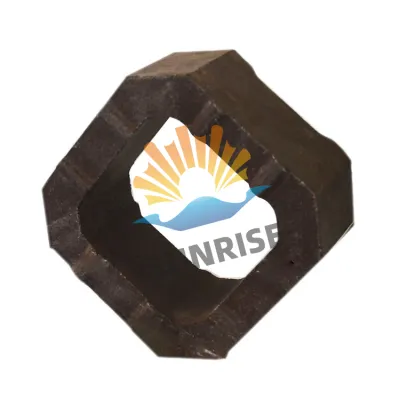
In high-temperature industrial applications like steelmaking, furnace lining materials must withstand extreme conditions—thermal shock, chemical erosion, and mechanical stress. Traditional magnesia bricks often fail under these pressures, leading to frequent maintenance, production downtime, and increased costs. That’s why more steel plants are turning to ordinary magnesia-chrome brick—a performance-driven solution backed by science.
The core ingredients of ordinary magnesia-chrome brick are high-purity sintered magnesia (MgO ≥ 96%) and refractory-grade chrome ore (Cr₂O₃ ≥ 45%). These aren’t just raw components—they work synergistically:
This combination forms a dense microstructure with minimal porosity—critical for resisting molten metal penetration and slag attack.
| Performance Metric | Ordinary Magnesia-Chrome Brick | Traditional Magnesia Brick |
|---|---|---|
| Cold Crushing Strength (CCS) | ≥ 120 MPa | ~70 MPa |
| Thermal Shock Resistance (ΔT) | ≥ 800°C | ~500°C |
| Slag Penetration Resistance | Low (<5%) after 2 hours | High (>15%) after 2 hours |
These numbers reflect real-world advantages: fewer replacements, longer service life, and consistent furnace performance even during rapid heating/cooling cycles.
A case study from a mid-sized Chinese steel mill shows how switching to ordinary magnesia-chrome brick reduced furnace downtime by 35% over six months. The plant reported:
It’s not just about durability—it’s about operational efficiency. When your kiln runs smoother, so does your entire production line.
You may have experienced furnace lining failures that disrupt your schedule. What if you could reduce those surprises by up to 40%?
Let your kiln run more efficiently—and stay stable through every cycle. Ordinary magnesia-chrome brick is the smart choice for modern steel mills.