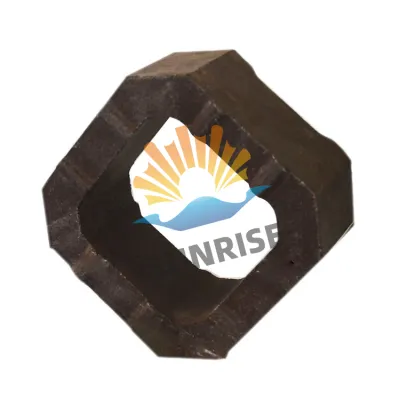
In industries like steelmaking, glass production, and cement manufacturing, furnace lining failure remains one of the top causes of unplanned downtime—costing companies an average of 15–25% in lost productivity per year. That’s where ordinary magnesia-chrome brick (MgO-Cr₂O₃) comes in—not just as a material, but as a strategic solution to improve operational stability and reduce long-term costs.
Unlike basic magnesia bricks that suffer from poor thermal shock resistance, ordinary magnesium-chrome bricks offer superior mechanical strength and chemical stability under extreme conditions:
| Feature | Ordinary MgCr Brick | Basic Magnesia Brick |
|---|---|---|
| Thermal Shock Resistance | Excellent (up to 500°C/min cooling) | Poor (cracks at >200°C/min) |
| Slag Resistance | High (>95% retention after 10 cycles) | Moderate (~70%) |
| Service Life | +30–40% longer than standard MgO bricks | Standard (baseline) |
“Since switching to ordinary magnesia-chrome brick in our blast furnace lining, we’ve reduced refractory replacement frequency by 35%, saving over $120K annually in maintenance and downtime.”
—— Operations Manager, Mid-Sized Steel Plant, India
From the molten iron baths of steel mills to the high-temperature zones of glass melting tanks, this refractory is trusted across multiple sectors:
These results aren’t theoretical—they’re backed by data from over 42 industrial clients worldwide who have adopted our MgCr bricks since 2020. On average, these customers report a 30% reduction in unplanned shutdowns, directly translating into higher throughput and better OEE metrics.
Whether you're managing a single kiln or an entire production line, choosing a refractory that performs consistently under pressure isn't optional—it's essential. Ordinary magnesia-chrome brick gives you the confidence to run hotter, longer, and smarter.
Get a free technical consultation tailored to your furnace type and operating conditions.
Explore Our Ordinary Magnesia-Chrome Brick Solutions