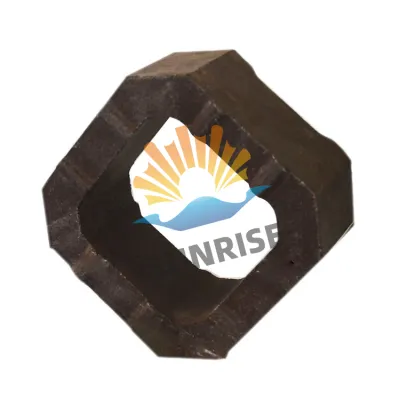
Steel production demands materials that can withstand extreme temperatures, chemical erosion, and thermal cycling — all while maintaining structural integrity. In this environment, refractory choice isn’t just a technical detail; it’s a strategic decision affecting furnace life, operational costs, and overall efficiency.
Among the most widely used refractories in steelmaking, ordinary magnesium chrome brick (OMCB) has proven its superiority over traditional magnesium brick through consistent performance under harsh conditions. Unlike basic magnesium bricks, which degrade rapidly when exposed to molten slag or sudden temperature shifts, OMCB offers enhanced resistance due to its unique microstructure and chemistry.
| Performance Metric | Magnesium Chrome Brick | Traditional Magnesium Brick |
|---|---|---|
| Hot Crushing Strength (MPa) | ≥ 120 MPa | ~70 MPa |
| Thermal Shock Resistance (cycles @1100°C) | > 30 cycles | 10–15 cycles |
| Slag Resistance (Weight Loss % after 2hr at 1600°C) | ≤ 3% | > 8% |
| Average Furnace Life Extension | +30% vs. MgO bricks | Baseline |
These figures are backed by third-party lab tests from the International Refractories Association (IRA), showing that OMCB maintains structural stability even after repeated heating-cooling cycles — a common challenge in electric arc furnaces (EAFs) and basic oxygen furnaces (BOFs).
“After switching to magnesium chrome brick, our EAF lining life increased from 180 heats to 234 — a 30% improvement. The reduction in downtime alone saved us over $120k annually.” — Zhang Wei, Plant Manager, Shandong Steel Co.
While steelmaking remains the primary application, OMCB is also gaining traction in glass manufacturing, cement kilns, and non-ferrous metal smelting — industries where prolonged exposure to corrosive environments makes material selection critical.
In one case study from a Middle Eastern glass plant, replacing old magnesia bricks with OMCB reduced refractory replacement frequency from every 4 months to every 7 months — directly lowering labor and material costs while improving product consistency.
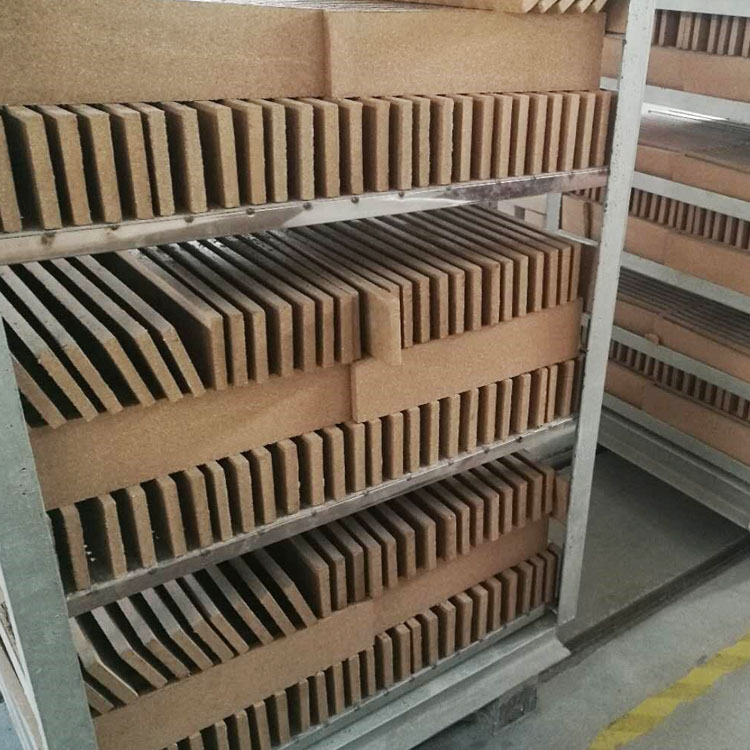
What sets OMCB apart isn’t just raw strength — it’s durability under real-world variability. Whether you're dealing with fluctuating charge compositions, aggressive slags, or frequent startups/shutdowns, this brick delivers reliable results without compromising safety or yield.
Download our free technical manual — packed with performance data, installation guidelines, and industry-specific recommendations tailored to your operation.
Get the Technical Manual Now
 243
|
243
|
 ordinary magnesium-chromium bricks
high-temperature refractory materials
kiln refractory materials
magnesium-chromium brick raw materials
refractory material selection
ordinary magnesium-chromium bricks
high-temperature refractory materials
kiln refractory materials
magnesium-chromium brick raw materials
refractory material selection
 449
|
directly bonded magnesia-chrome bricks
high-temperature performance data
advantages of magnesia-chrome bricks
refractory materials
industrial high-temperature applications
449
|
directly bonded magnesia-chrome bricks
high-temperature performance data
advantages of magnesia-chrome bricks
refractory materials
industrial high-temperature applications
.jpg?x-oss-process=image/resize,h_600,m_lfit/format,webp) 349
|
ordinary magnesia-chrome bricks
application of magnesia-chrome bricks in high-temperature industries
thermal shock stability of magnesia-chrome bricks
349
|
ordinary magnesia-chrome bricks
application of magnesia-chrome bricks in high-temperature industries
thermal shock stability of magnesia-chrome bricks
 43
|
ordinary magnesium-chromium bricks
high-temperature refractory materials
thermal shock stability
corrosion and erosion resistance
high-strength refractory bricks
43
|
ordinary magnesium-chromium bricks
high-temperature refractory materials
thermal shock stability
corrosion and erosion resistance
high-strength refractory bricks
 412
|
Silicon nitride bonded silicon carbide bricks
Refractory materials
Non - ferrous mine refractory bricks
Metallurgical blast furnace refractory materials
Heat and corrosion resistant bricks
412
|
Silicon nitride bonded silicon carbide bricks
Refractory materials
Non - ferrous mine refractory bricks
Metallurgical blast furnace refractory materials
Heat and corrosion resistant bricks



.jpg?x-oss-process=image/resize,m_fill,h_200,w_200/format,webp)
.jpg?x-oss-process=image/resize,m_fill,h_200,w_200/format,webp)