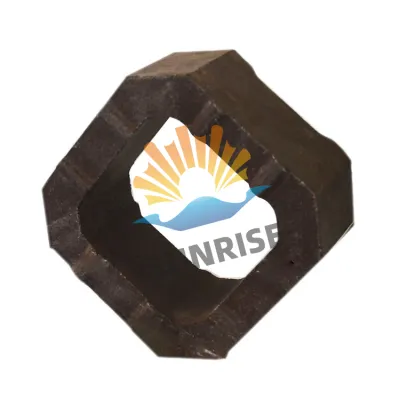
In high-temperature industrial environments like cement production, refractory materials aren’t just accessories—they’re the backbone of consistent performance and safety. For one global cement manufacturer in Southeast Asia, switching from traditional magnesia bricks to standard magnesia-chrome brick wasn't just a material upgrade—it was a game-changer.
Before the switch, their rotary kiln experienced frequent lining failures every 4–6 months due to thermal shock and chemical erosion. Production downtime cost them an estimated $12,000 per day in lost output. Then came the change—after installing standard magnesia-chrome brick (with 65% MgO and 30% Cr₂O₃), they saw:
The secret lies in composition and microstructure. Standard magnesia-chrome brick combines sintered magnesia with chromium oxide, forming a dense, interlocking crystal network that resists both mechanical stress and chemical attack.
| Property | Magnesia Brick | Magnesia-Chrome Brick |
|---|---|---|
| Hot Strength (1400°C) | ~15 MPa | ~35 MPa |
| Thermal Shock Resistance | Low (cracks after 5 cycles) | High (no cracks after 20 cycles) |
| Slag Penetration Resistance | Poor (7 mm depth in 24 hrs) | Excellent (≤1 mm depth in 24 hrs) |
As one plant manager noted: “We used to replace the brick every 5 months. Now it lasts 10–12 months without issues. It’s not just about saving money—it’s about stability.”
For manufacturers facing recurring refractory wear or inconsistent kiln operation, this case study proves that choosing the right material isn’t optional—it’s essential.
Let us help you transition to a more durable, efficient, and cost-effective refractory solution tailored for your cement plant.
Get Your Free Refractory Evaluation Report