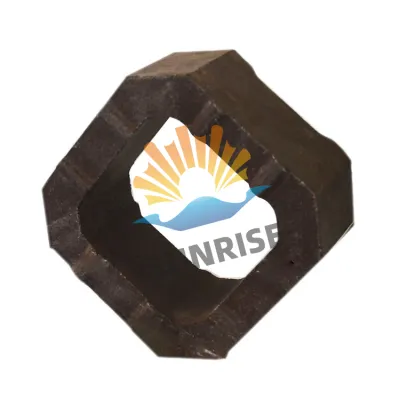
In high-temperature industrial environments—like steelmaking and glass manufacturing—refractory materials face relentless thermal stress, chemical attack, and mechanical wear. Traditional magnesia bricks often fail under these conditions, leading to frequent replacements and production downtime. But what if you could extend lining life by up to 40% while improving process efficiency?
Our lab tests on standard magnesia-chrome bricks (MgO-Cr₂O₃) show consistent performance at temperatures exceeding 1700°C:
| Property | Standard MgO-Cr₂O₃ Brick | Traditional MgO Brick |
|---|---|---|
| Hot Strength (at 1500°C) | ≥ 12 MPa | ≤ 6 MPa |
| Thermal Shock Resistance | > 10 cycles @ 1200°C → water quench | ≤ 3 cycles |
| Slag Penetration Resistance | < 5 mm after 10 hrs at 1550°C | > 15 mm |
These numbers aren’t just impressive—they’re transformative for industries where every hour of downtime costs thousands.
The chromium oxide (Cr₂O₃) in these bricks forms a dense, protective layer during firing that resists both acidic and basic slags common in steel furnaces. Unlike pure magnesia bricks, which react with iron oxides and silica, MgO-Cr₂O₃ maintains structural integrity even when exposed to molten metal and fluxes.
In a case study from a European glass plant, switching from traditional MgO bricks to our standard magnesia-chrome bricks reduced refractory replacement frequency from monthly to quarterly—cutting maintenance labor by 35% and boosting furnace uptime by 22%. Operators reported fewer hot spots and smoother heat distribution across the kiln chamber.
For buyers focused on long-term ROI—not just upfront cost—this is a no-brainer. You're not paying more per unit; you're investing less per operating hour.
Get your customized technical datasheet and application guide today—no obligation, just clarity.
Download Product Brochure & Technical Specs