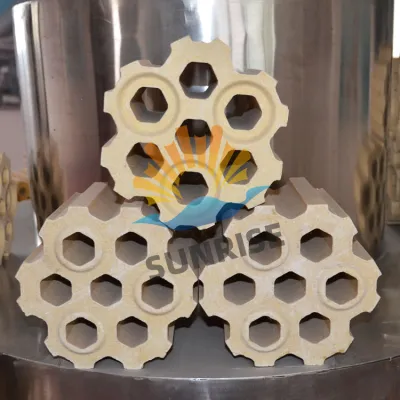
When it comes to industrial heat management in steelmaking, few components are as critical—or as often overlooked—as the refractory lining inside a blast furnace hot stove. Among these materials, silicon brick stands out due to its unique microstructure and superior thermal performance, making it an essential upgrade from traditional clay or high-alumina bricks.
Silicon brick’s core advantage lies in its dominant flaky quartz phase structure, which allows for exceptional heat transfer efficiency. Unlike clay bricks (thermal conductivity ~1.2 W/m·K) or high-alumina bricks (~2.0 W/m·K), silicon brick can achieve up to 3.5 W/m·K at operating temperatures above 1200°C. This means faster heating cycles, better energy retention, and reduced fuel consumption—often by 8–12% in real-world applications.
In practical terms, this translates to measurable savings: one major Chinese steel plant reported a 10.3% drop in gas usage after switching to silicon brick linings across three hot stoves over six months—a gain of approximately $45,000 annually per unit.
Quality isn’t just about composition—it’s also about consistency. Our silicon bricks meet strict dimensional tolerances:
| Feature | Tolerance |
|---|---|
| Hole Diameter (孔径) | ±1 mm |
| Other Dimensions | ≤ ±1% |
This precision ensures tight joints, minimal air leakage, and long-term structural integrity—even under extreme thermal cycling conditions.

For external combustion-type hot stoves—common in modern blast furnaces—the upper joint area requires special attention. Here, we recommend using composite bricks with pre-cut edges and precision grinding before installation. A proper dry-fit test (pre-assembly check) is crucial to avoid field adjustments that could compromise thermal sealing.
Our technical team works closely with clients to provide detailed installation guides, including cut diagrams and alignment specs, ensuring smooth integration into existing systems without downtime.
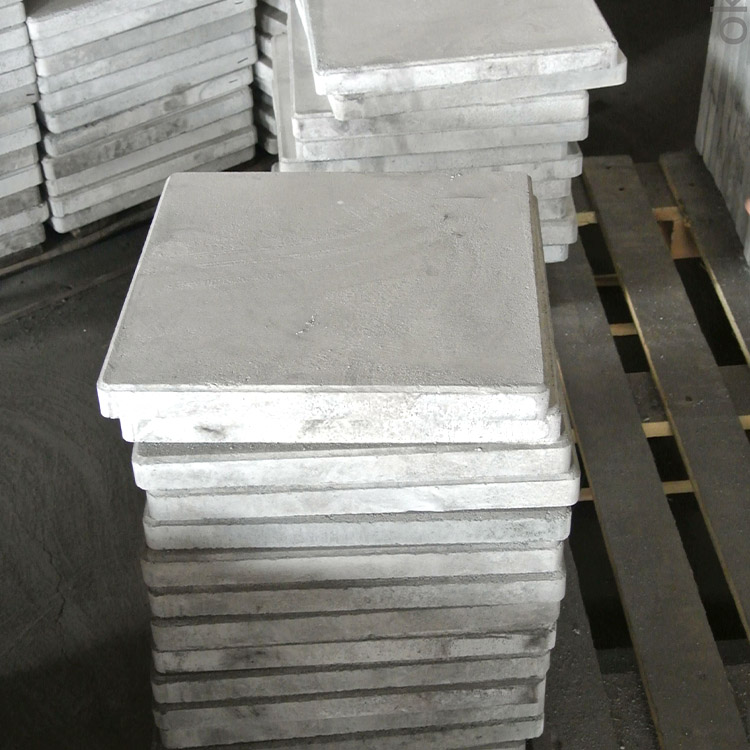
Choosing silicon brick isn't just about material selection—it's about investing in operational stability, energy efficiency, and long-term ROI. Whether you're upgrading old equipment or designing new installations, this refractory solution delivers measurable results.
Let every high-temperature zone be built to last—because trust starts where performance meets precision.