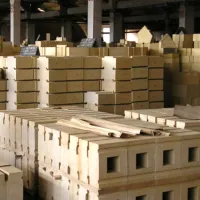
The service life of refractory materials directly impacts the operational efficiency, maintenance costs, and production continuity of glass furnaces. As a professional manufacturer of high-quality refractory products including fused AZS bricks, zirconia corundum bricks, and silica bricks, Zhengzhou Sunrise Refractory Co., Ltd. combines years of industry experience to provide essential technical guidance on maximizing refractory service life through scientific installation, standardized operation, and proactive maintenance.
The baking stage is crucial for removing moisture and preventing thermal shock damage to refractory linings. A well-designed heating curve should:
| Temperature Range | Heating Rate | Key Considerations |
|---|---|---|
| Ambient to 200°C | 5-10°C/hour | Remove physical moisture, ensure proper ventilation |
| 200°C to 600°C | 10-15°C/hour | Remove chemically bound water, monitor pressure build-up |
| 600°C to operating temp | 15-25°C/hour | Gradual temperature increase to avoid thermal stress |
"Improper baking accounts for approximately 30% of premature refractory failures in glass furnaces. Following material-specific heating curves developed by Zhengzhou Sunrise can significantly improve initial lining integrity."
Implementing a systematic inspection program is essential for early detection of refractory issues:
Zhengzhou Sunrise Refractory offers technical support for refractory condition assessment and maintenance planning, helping glass manufacturers optimize maintenance schedules and minimize unplanned downtime. Our expertise in fused AZS bricks, zirconia corundum bricks, and other specialized refractories enables us to provide targeted solutions for extending furnace service life.
Maximizing glass furnace refractory service life requires a comprehensive strategy encompassing quality materials, professional installation, scientific baking, optimal operation, and proactive maintenance. By implementing these practices, glass manufacturers can significantly extend refractory life, reduce production costs, and improve operational efficiency.
As a trusted supplier of high-performance refractory products to global glass manufacturers in Southern Europe, Northern Europe, Central America, Southeast Asia, and the Middle East, Zhengzhou Sunrise Refractory Co., Ltd. is committed to supporting our customers with not only premium refractory materials but also the technical expertise needed to maximize their investment in furnace linings.

 302
|
302
|
 vermiculite insulation board
aluminum industry refractory materials
electrolytic cell lining
cryolite resistance
high temperature insulation
vermiculite insulation board
aluminum industry refractory materials
electrolytic cell lining
cryolite resistance
high temperature insulation
 335
|
high thermal conductivity silica bricks
silica brick structure optimization
thermal conductivity enhancement
industrial refractory materials
energy saving
335
|
high thermal conductivity silica bricks
silica brick structure optimization
thermal conductivity enhancement
industrial refractory materials
energy saving
 177
|
glass furnace erosion
refractory failure
thermal shock resistance
furnace lifespan
Zhengzhou Sunrise Refractory Co., Ltd.
485
|
refractory material selection
glass kiln
working condition matching
AZS brick
Zhengzhou Sunrise Refractory Co., Ltd.
177
|
glass furnace erosion
refractory failure
thermal shock resistance
furnace lifespan
Zhengzhou Sunrise Refractory Co., Ltd.
485
|
refractory material selection
glass kiln
working condition matching
AZS brick
Zhengzhou Sunrise Refractory Co., Ltd.
 218
|
coke oven silica brick
high-purity silica dioxide
refractory performance
coke oven life
thermal shock stability
218
|
coke oven silica brick
high-purity silica dioxide
refractory performance
coke oven life
thermal shock stability