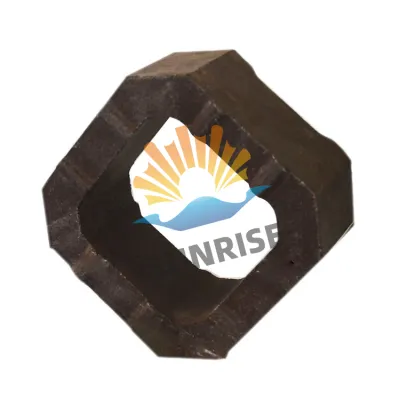
In the high - temperature environment of glass kilns, refractory materials face significant challenges. Traditional refractory materials often crack due to thermal shock or have insufficient slag resistance, leading to frequent replacements and increased production costs. Ordinary magnesia - chrome bricks have emerged as the preferred solution in the industry, thanks to their high strength, excellent slag resistance, and remarkable thermal shock stability.
Glass kilns operate under extremely high temperatures, sometimes reaching over 1500°C. Traditional refractory materials struggle to withstand such harsh conditions. For example, they may lose up to 30% of their structural integrity after just 50 thermal cycles, which forces manufacturers to replace them every few months. This not only incurs high material costs but also leads to significant downtime, reducing production efficiency.
Ordinary magnesia - chrome bricks, on the other hand, offer a more reliable alternative. They are designed to endure the rigors of high - temperature environments, providing a long - lasting solution for glass kilns.
Strength: These bricks have a compressive strength of up to 50 MPa, which is significantly higher than many traditional refractory materials. This high strength allows them to withstand the mechanical stress in the kiln, ensuring the stability of the kiln structure.
Slag Resistance: In slag resistance tests, ordinary magnesia - chrome bricks showed a weight loss of only 5% after being exposed to molten slag for 100 hours, while other common materials had a weight loss of up to 20%. This excellent slag resistance prevents the penetration of slag into the bricks, extending their service life.
Thermal Shock Stability: They can withstand rapid temperature changes without cracking. After 100 thermal cycles between 1000°C and room temperature, the residual strength of ordinary magnesia - chrome bricks remains above 80%, indicating their superior thermal shock stability.

Ordinary magnesia - chrome bricks are widely used in the glass manufacturing and steel smelting industries. In glass manufacturing, they are used in the melting zone of the glass kiln, where the temperature is the highest and the slag corrosion is the most severe. In steel smelting, they are used in the lining of the steel ladle, effectively resisting the erosion of molten steel and slag.
| Properties | Ordinary Magnesia - Chrome Bricks | Magnesia Bricks |
|---|---|---|
| Compressive Strength (MPa) | 50 | 30 |
| Slag Resistance (Weight Loss after 100 hours) | 5% | 15% |
| Thermal Shock Stability (Residual Strength after 100 cycles) | >80% | 60% |
As shown in the table, ordinary magnesia - chrome bricks outperform magnesia bricks in multiple aspects, making them a more cost - effective choice for high - temperature applications.
"Since we switched to ordinary magnesia - chrome bricks in our glass kiln, the replacement frequency has been reduced from every 3 months to once a year. This has not only saved us a lot of money on materials but also increased our production efficiency by 20%. We are very satisfied with this product." - ABC Glass Company
Another steel smelting company reported that after using ordinary magnesia - chrome bricks in their steel ladles, the service life of the ladles increased from 50 to 100 cycles, which significantly reduced their production costs.
Ordinary magnesia - chrome bricks offer a comprehensive solution for high - temperature applications in glass kilns and other industries. Their high strength, excellent slag resistance, and superior thermal shock stability make them the preferred choice for many manufacturers. Why are more and more enterprises choosing them? Because they can make your kiln more durable and more worry - free.
If you want to learn more about how ordinary magnesia - chrome bricks can meet your high - temperature requirements and improve your kiln's performance, click here to get in touch with us today!