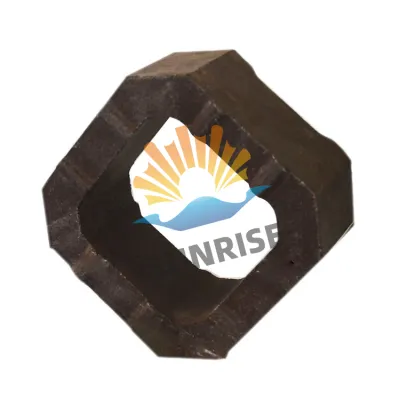
Glass furnaces represent significant capital investments for manufacturers, yet many operations face persistent challenges with premature erosion, unexpected spalling, and inconsistent service life. These issues not only disrupt production schedules but also increase operational costs and compromise product quality. While operational parameters and maintenance practices play important roles, Zhengzhou Sunrise Refractory's decades of experience in serving global glass manufacturers reveals that refractory material selection often emerges as the critical variable determining furnace performance and longevity.
Often concentrated in the glass contact zones, erosion manifests as gradual material loss caused by the mechanical action of molten glass flow and chemical reactions with furnace atmospheres. The severity directly correlates with the refractory's resistance to alkali attack and molten glass penetration.
Characterized by sudden detachment of refractory layers, spalling typically results from thermal shock, structural stress accumulation, or incompatible expansion coefficients between material layers. This can lead to catastrophic furnace failures if not addressed promptly.
Long-term exposure to high temperatures can cause microstructural changes in refractories, leading to phase transformations and crystal growth. This degradation pathway reduces material strength and increases vulnerability to chemical attack over time.
Unexpected fluctuations in refractory service life between furnace campaigns often stem from inconsistent material quality, improper material selection for specific furnace zones, or inadequate consideration of operating conditions during material specification.
While operational factors certainly influence furnace durability, Zhengzhou Sunrise Refractory's technical analysis consistently demonstrates that material selection serves as the foundation for addressing these common failure modes. Different refractory materials exhibit distinct performance characteristics that directly impact their suitability for specific furnace zones and operating conditions.
| Refractory Type | Primary Advantages | Typical Applications | Key Performance Metrics |
|---|---|---|---|
| AZS Materials (33#, 36#, 41#) | Exceptional resistance to alkali corrosion, high temperature stability, minimal glass penetration | Glass furnace superstructure, throat, regenerators, melting zones | ZrO₂ content, apparent porosity, bulk density, thermal shock resistance |
| Alumina Products | High mechanical strength, excellent thermal shock resistance, chemical inertness | Burners, ports, areas with high thermal cycling | Al₂O₃ content, cold crushing strength, modulus of rupture |
| Mullite Bricks | Low thermal expansion, good thermal shock resistance, moderate chemical resistance | Furnace crowns, sidewalls, regenerator checkerwork | Mullite content, thermal expansion coefficient, refractoriness under load |
| Zirconia-Based Materials | Superior resistance to glass corrosion, high temperature stability | Critical glass contact areas, feeders, spouts | ZrO₂ content, corrosion resistance, thermal shock parameters |
"The most advanced furnace design cannot overcome the limitations of improperly selected refractories. Our technical collaboration with glass manufacturers across Europe, Southeast Asia, and the Middle East consistently demonstrates that material selection directly impacts production efficiency, maintenance costs, and overall furnace service life."
— Technical Team, Zhengzhou Sunrise Refractory Co., Ltd.
Different glass types and production processes impose unique demands on refractory materials. Zhengzhou Sunrise Refractory works closely with clients to analyze specific operating parameters and select optimal materials for each furnace zone:
Zhengzhou Sunrise Refractory recommends evaluating these critical factors when selecting refractories for glass furnace applications:
By addressing these material selection factors proactively, glass manufacturers can significantly reduce issues with erosion, spalling, and premature refractory failure. Zhengzhou Sunrise Refractory's technical expertise, combined with our comprehensive product range including AZS materials, alumina products, and specialty refractories, enables us to provide tailored solutions for glass furnaces worldwide. Our commitment to quality and technical support has established long-term partnerships with glass manufacturers across Southern Europe, Northern Europe, Central America, Southeast Asia, and the Middle East.
Understanding the critical role of refractory material selection represents the first step toward achieving consistent furnace performance, extended service life, and optimized production efficiency in glass manufacturing operations.


 139
|
139
|
 glass furnace refractory material
refractory material classification
application scenarios
material selection knowledge
Zhengzhou Sunrise Refractory
glass furnace refractory material
refractory material classification
application scenarios
material selection knowledge
Zhengzhou Sunrise Refractory
 77
|
silica bricks for coke ovens
high purity silica bricks
coke oven lifespan
refractory silica bricks
quartz refractory materials
77
|
silica bricks for coke ovens
high purity silica bricks
coke oven lifespan
refractory silica bricks
quartz refractory materials
 260
|
silica bricks for hot blast stoves
high thermal conductivity silica bricks
industrial energy-saving materials
hot blast stove refractory bricks
silica brick reliability
157
|
glass furnace cases
refractory configuration
furnace bottom bricks
hot spot refractories
Zhengzhou Sunrise Refractory
485
|
refractory material selection
glass kiln
working condition matching
AZS brick
Zhengzhou Sunrise Refractory Co., Ltd.
260
|
silica bricks for hot blast stoves
high thermal conductivity silica bricks
industrial energy-saving materials
hot blast stove refractory bricks
silica brick reliability
157
|
glass furnace cases
refractory configuration
furnace bottom bricks
hot spot refractories
Zhengzhou Sunrise Refractory
485
|
refractory material selection
glass kiln
working condition matching
AZS brick
Zhengzhou Sunrise Refractory Co., Ltd.