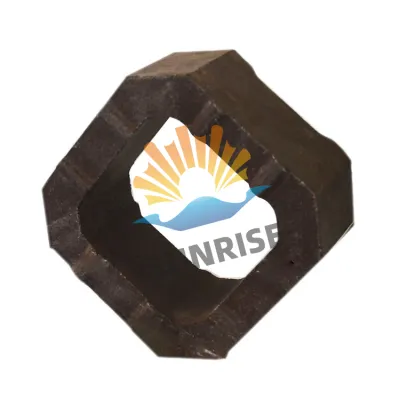
In high - temperature industries such as steel smelting and glass manufacturing, the selection of suitable refractory materials is crucial. Traditional refractory materials often face challenges such as material failure under extreme conditions, which can lead to equipment downtime, increased maintenance costs, and reduced production efficiency. This is where the ordinary magnesia - chrome brick comes into play.
Ordinary magnesia - chrome bricks have excellent strength. Their compressive strength can reach up to 50MPa, and the flexural strength is ≥8MPa. This high - strength characteristic enables them to withstand the mechanical stress generated in high - temperature environments, ensuring the stability of the refractory lining. For example, in a steel - making furnace, the bricks need to bear the weight of molten steel and the impact during the smelting process. The high strength of ordinary magnesia - chrome bricks ensures that they will not crack or deform easily under such heavy loads.
One of the most significant advantages of ordinary magnesia - chrome bricks is their outstanding corrosion resistance. In high - temperature industrial environments, the refractory materials are often corroded by various chemical substances. Tests have shown that ordinary magnesia - chrome bricks can resist the corrosion of acidic and alkaline slags effectively. In a glass - melting furnace, the molten glass contains a large number of alkaline substances. The corrosion rate of ordinary magnesia - chrome bricks in this environment is less than 1% per year, which is far lower than that of traditional magnesia bricks.
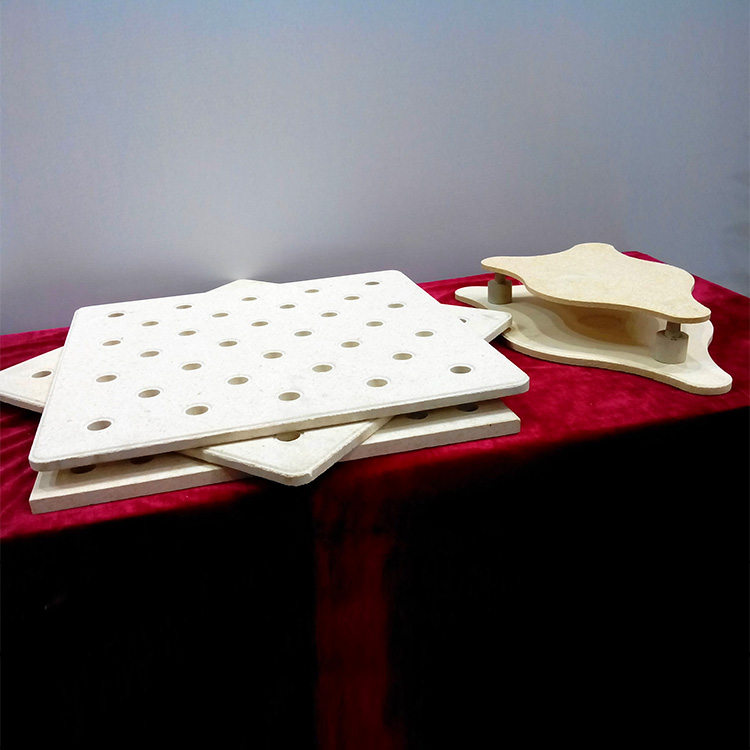
Ordinary magnesia - chrome bricks also have excellent slag resistance. The slag in high - temperature industries can penetrate into the refractory materials, causing damage. However, the dense structure of ordinary magnesia - chrome bricks can effectively prevent slag penetration. According to industry data, in a steel - smelting converter, the slag penetration depth of ordinary magnesia - chrome bricks is less than 5mm after continuous use for 100 hours, while that of traditional magnesia bricks can reach more than 15mm.
Thermal shock stability is another key performance of ordinary magnesia - chrome bricks. In high - temperature industrial processes, the temperature often changes suddenly, which can cause thermal stress in the refractory materials and lead to cracking. Ordinary magnesia - chrome bricks can withstand rapid temperature changes from room temperature to 1200°C without significant damage. After 50 thermal shock cycles between room temperature and 1200°C, the strength loss of ordinary magnesia - chrome bricks is less than 10%, while that of traditional magnesia bricks can reach more than 30%.
Compared with traditional magnesia bricks, ordinary magnesia - chrome bricks have obvious advantages. A performance comparison chart is shown below:
| Product | Compressive Strength (MPa) | Flexural Strength (MPa) | Corrosion Rate (%) | Slag Penetration Depth (mm) | Strength Loss after Thermal Shock (%) |
|---|---|---|---|---|---|
| Ordinary Magnesia - Chrome Brick | 50 | ≥8 | <1 | <5 | <10 |
| Traditional Magnesia Brick | 30 | 5 | 3 | 15 | 30 |
As can be seen from the table, ordinary magnesia - chrome bricks are superior to traditional magnesia bricks in all aspects of performance.
Ordinary magnesia - chrome bricks have a wide range of applications in high - temperature industries:
"Since we started using ordinary magnesia - chrome bricks in our steel - making furnace, the maintenance frequency has been reduced by half, and the production efficiency has increased by 20%. It's really a great product." - A steel - making plant manager
Choosing ordinary magnesia - chrome bricks means choosing less downtime and higher - efficiency production support. If you are interested in learning more about ordinary magnesia - chrome bricks or need professional advice on refractory material selection, please click here to contact us.