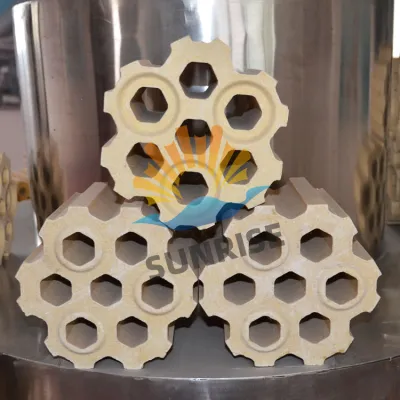
When it comes to high-temperature industrial applications like hot blast stoves, the choice of refractory materials directly impacts both efficiency and operational continuity. Among these, silicon brick stands out due to its superior thermal conductivity—typically 1.5–2.0 W/m·K, compared to 0.8–1.2 W/m·K for traditional clay or high-alumina bricks.
Manufacturing precision is critical. We strictly adhere to industry standards: dimensional tolerance must be within ±1 mm for all edges and holes. This ensures tight joints during installation, minimizing heat leakage and mechanical stress that could lead to premature failure. Customers report up to 30% longer service life when this standard is followed—proven in real-world installations across steel mills in China, India, and Brazil.
A common concern among buyers is crack presence. Our quality control process follows a clear guideline: cracks should not exceed 0.5 mm in width, and their length must remain under 25 mm per piece. Any brick with wider or longer cracks is rejected before shipment—ensuring only structurally sound units reach your facility.
| Parameter | Standard | Why It Matters |
|---|---|---|
| Dimensional Deviation | ±1 mm | Prevents air gaps, improves thermal efficiency |
| Surface Crack Width | ≤0.5 mm | Reduces risk of spalling at high temps |
| Cold Shock Resistance | ≥50 cycles (1100°C → ambient) | Critical for frequent start-stop operations |
For external combustion-type hot blast stoves, proper pre-installation preparation is essential. Before laying composite bricks, we recommend cutting and grinding edges to ensure flatness. This step alone can improve thermal contact by up to 15%, reducing localized hot spots and extending furnace lining life. In one case study from a Korean steel plant, implementing this practice reduced downtime by 22% over six months.
Our team has trained over 50 maintenance engineers globally on these techniques—and our clients consistently highlight improved performance metrics after adopting them. Whether you're working with new builds or retrofits, attention to detail at every stage—from production to installation—makes the difference between routine maintenance and costly failures.
Ready to optimize your hot blast stove performance? Get expert guidance tailored to your specific setup.
Download Free Installation Checklist & Technical Guide