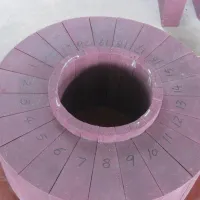
In the competitive world of aluminum production, energy efficiency isn’t just a goal—it’s survival. A leading electrolytic aluminum plant in China recently achieved remarkable results after switching to vermiculite insulation panels for their molten metal cells. The outcome? A 27% drop in heat loss, extended cell life beyond 10 years, and significant reductions in maintenance downtime.
“Before installing the vermiculite panels, our operators were constantly battling thermal fluctuations and lining erosion. Now, we’re seeing consistent temperatures and fewer repairs—this is true operational stability.” — Zhang Wei, Maintenance Manager at HuaNeng Aluminum Co., Ltd.
Most conventional insulating materials used in aluminum smelting—like ceramic fiber blankets or lightweight refractory bricks—have a thermal conductivity of around 0.15–0.25 W/m·K. Over time, they degrade under continuous exposure to molten alumina (above 950°C), leading to increased energy consumption and frequent shutdowns for repair.
Our customers report that traditional solutions typically last only 3–5 years before requiring replacement due to structural degradation and chemical attack from fluorides. That means high lifecycle costs—not to mention lost production hours during maintenance windows.
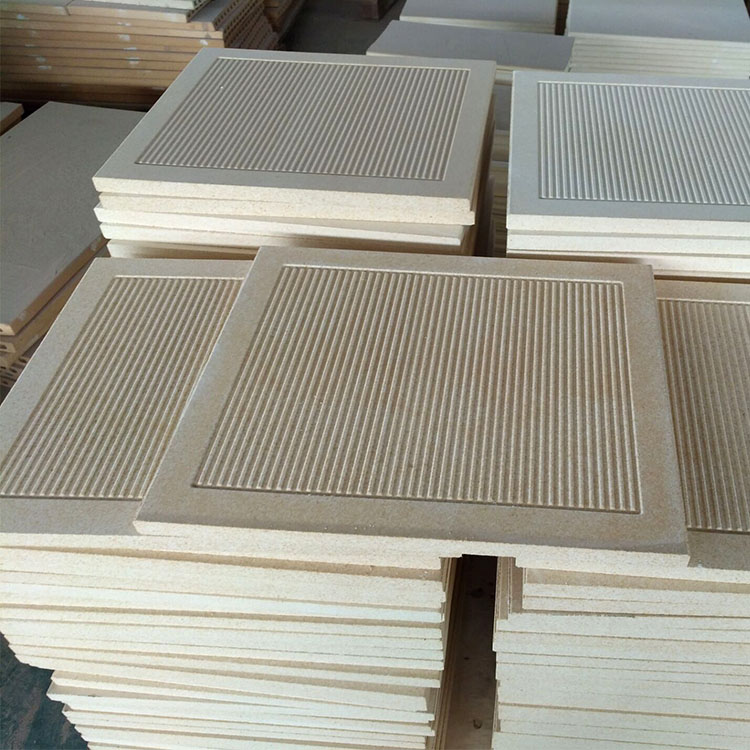
Vermiculite insulation panels are engineered with natural mineral composition that expands when heated—creating an ultra-low-density, highly stable structure. With a measured thermal conductivity of just 0.06 W/m·K, these panels reduce heat transfer by over 60% compared to standard options.
But it’s not just about staying cool—it’s about staying safe and efficient. These panels feature:
These properties translate into real-world savings: one customer saw a 27% reduction in electricity usage per ton of aluminum produced, while another reported cutting annual maintenance costs by $42,000 USD.
As global regulations tighten on carbon emissions, aluminum producers must adapt. By lowering thermal losses and extending equipment life, vermiculite insulation directly supports ESG goals. In fact, a recent study by the International Aluminum Institute found that optimized insulation can reduce CO₂ emissions by up to 1.2 tons per 1,000 tons of aluminum produced.
This isn’t just about saving money—it’s about building resilience. Every degree of temperature control gained through better insulation translates to more predictable output, reduced wear-and-tear, and higher yield consistency across shifts.
Let us show you how our vermiculite insulation panels can help your facility achieve longer uptime, lower energy bills, and smarter sustainability metrics.
Get Your Free Technical Specification Pack
 399
|
399
|
 High - purity silica bricks
Coke oven refractory materials
Silica brick performance comparison
Silica dioxide content
Coke oven life extension
High - purity silica bricks
Coke oven refractory materials
Silica brick performance comparison
Silica dioxide content
Coke oven life extension
.jpg?x-oss-process=image/resize,h_600,m_lfit/format,webp) 269
|
directly banded magnesia-chromite bricks
unfired magnesia-chromite bricks
product comparison
high-temperature strength
refractory materials
metallurgy industry
glass industry
269
|
directly banded magnesia-chromite bricks
unfired magnesia-chromite bricks
product comparison
high-temperature strength
refractory materials
metallurgy industry
glass industry
 80
|
Directly bonded magnesia-chrome bricks
high-temperature performance of refractory materials
technological advancement in refractory industry
80
|
Directly bonded magnesia-chrome bricks
high-temperature performance of refractory materials
technological advancement in refractory industry
 364
|
Silicon nitride bonded silicon carbide bricks
Refractory material performance analysis
Metallurgical blast furnace efficiency improvement
Thermal shock - resistant refractory bricks
Silicon carbide brick inspection report
364
|
Silicon nitride bonded silicon carbide bricks
Refractory material performance analysis
Metallurgical blast furnace efficiency improvement
Thermal shock - resistant refractory bricks
Silicon carbide brick inspection report
 60
|
Common magnesia-chrome bricks
High-temperature refractory materials
Slag resistance
Thermal shock stability
Magnesia-chrome brick applications
60
|
Common magnesia-chrome bricks
High-temperature refractory materials
Slag resistance
Thermal shock stability
Magnesia-chrome brick applications
.jpg?x-oss-process=image/resize,m_fill,h_200,w_200/format,webp)

.jpg?x-oss-process=image/resize,m_fill,h_200,w_200/format,webp)


.jpg?x-oss-process=image/resize,m_fill,h_200,w_200/format,webp)